The pipa is a pear-shaped, fretted lute. It migrated from Central Asia into China during the Han and Sui dynasties; its name comes from the two directions of the plectrum stroke, p'i (forward) and p'a (backward). Until the mid-tenth century it was held horizontally and its twisted silk strings were plucked with a large triangular plectrum. Toward the end of the Tang dynasty musicians began using their fingernails, and the instrument came to be held more upright.
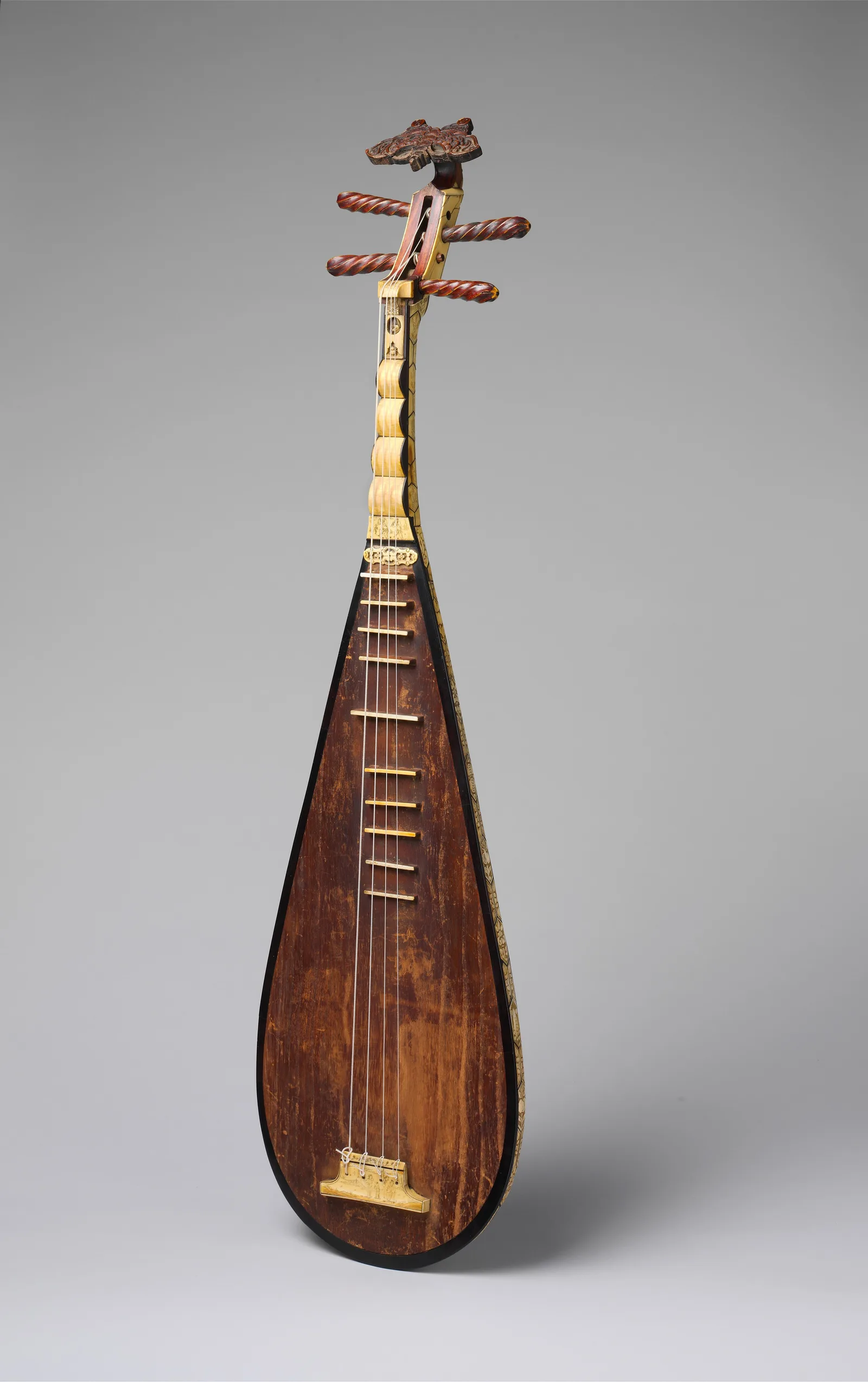
instrument
Pipa
琵琶
A pear-shaped Chinese lute, plucked and fretted, heard in opera and storytelling ensembles and in a virtuosic solo repertory.
- Type
- instrument
- Instrument family
- Lute
- How sound is produced
- Plucked
- Also known as
- p'i-p'a, 琵琶
- Updated
- 2026-10-13
- plucked
- lute
- fretted
Structure & Sound
Only what the cited sources document.- Strings
- Twisted silk strings; originally plucked with a large triangular plectrum
- Structure
- A pear-shaped body with a fretted neck
What vibrates, and how the strings are set up.
Body and construction.
Playing Technique
What the player does, and the named techniques behind it.- Playing method
- Plucked; from the late Tang dynasty onward increasingly with the fingernails rather than a plectrum
What each hand does.
Where it is heard
Documented settings, ensembles and occasions.- Typical context
- Opera, storytelling ensembles, and a solo repertory of programmatic, virtuosic music
Where the instrument is normally heard.
Instrument family
How this site groups instrumentsPlucked String Instruments (弹拨乐器)
This site groups instruments by how their sound is produced — bowed, plucked, blown or struck. Pipa is a plucked string instrument.
Also in this family
Sources for Pipa
The Metropolitan Museum of Art · museum
Supports:
- The pipa's origin as a pear-shaped lute that migrated from Central Asia into China during the Han and Sui dynasties
- The name derives from the forward and backward plectrum strokes p'i and p'a
- Changes in playing: horizontal hold and a triangular plectrum until the mid-10th century, later a more upright hold and the fingernails
- Contexts: opera, storytelling ensembles, and a solo repertory of programmatic, virtuosic music
- Museum classification: chordophone, plucked fretted lute
Not yet documented for this entry: related instruments · history and culture · music theory. Nothing is added to an entry until a source supports it.